
Major changes in computational software
Our anniversary symposium on April 9th in Delft will discuss the big changes in our field. This blog post offers a preview.

AI-supported programming
A first big development in our field is the rise of AI-assisted programming. This has not gone unnoticed by our clients. Tools like GitHub Copilot enable them to do some of the programming work themselves rather than outsource it.
However, there is still a large gap between generating a piece of software and building a reliable, large-scale application. Although these tools are impressive in many respects, they are not yet a replacement for an experienced software developer.
We see that generating entire programs with AI only works for smaller, usually temporary applications. However, for the kind of large-scale software that we typically work on, the AI tools primarily serve as programming support. We typically use them (if allowed by the client) for things like writing (unit) tests and boilerplate code, explaining the operation of opaque code, and generating annotations. See also our blog on this topic.

Physics AI
The rise of Physics AI can also have significant benefits for at least some of our clients. Physics AI is a crossover between machine learning and traditional mathematical modelling. An important use-case for this technology is to create extremely fast machine learning models for applications related to physical reality. Such fast models are ideal for scenario studies, optimization, or model-in-the-loop control. The data for training Physics AI models can be the results of traditional simulations as well as measurement data from sensors.
In this blog post, we explain Physics AI in more detail. A more extensive discussion of the opportunities it offers can be found in our whitepaper on Physics AI. This topic won’t be addressed at the symposium because we plan to have a separate event on it later in the year. However, feel free to ask our staff at the symposium: they’ll be happy to connect you with our specialists.
New Computing Platforms
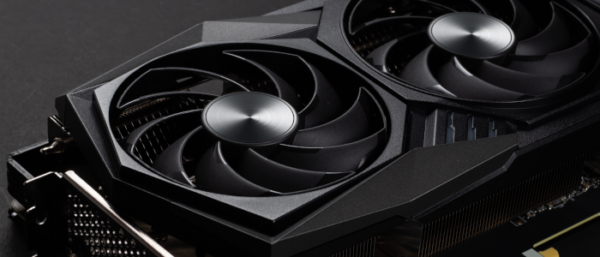
The symposium will feature yet another major development in our field: the transformation of computing systems. All over the world, but particularly in the US, massive computing centres are being built, entirely dedicated to machine learning. An AI factory is also planned for the Netherlands.
These developments also impact the more traditional forms of large-scale computing. New processor architectures become available, and we increasingly see hybrid systems incorporating multicore CPUs, GPUs, and other types of processors. This, in turn, places new demands on the way applications are developed.

Quantum computing
The final topic of our symposium is quantum computing. Practical applications are still very limited, to say the least, partly because quantum computers have not yet gone beyond the stage of prototype or demonstrator. For the types of applications that our clients have, quantum computing isn’t a realistic option yet. However, universities are actively researching quantum algorithms for a wider range of applications. It’s certainly conceivable that this will become applicable to some of our clients’ challenges in a few years.
Symposium The Future is Here: Computing in 5, 10, and 15 Years
Come and learn more about these developments at our anniversary symposium on Thursday afternoon, April 9th, in Delft. All information can be found on the anniversary page of our website. You can register directly via this link.